
Honeysuckle & Underbrush Clearing in Lake Saint Louis, MO
The #1 invasive problem on Missouri and Illinois land.
Bush honeysuckle is the single most damaging invasive plant across Eastern Missouri and Southwest Illinois. It was planted as an ornamental for decades, it spreads aggressively by seed, and it shades out the native understory — wildflowers, young oaks, and the grass your pasture needs. If your fence lines, creek banks, or wooded draws have filled in with a wall of green that leafs out earlier and holds its leaves longer than everything around it, that's honeysuckle.
We remove honeysuckle and invasive underbrush across the region — from Florissant and Kirkwood to St. Louis and out to Columbia.
Why Honeysuckle Is So Destructive
Amur honeysuckle and its relatives are on Missouri's noxious weed list — you can't legally sell or plant them, but established populations keep spreading on their own. A single shrub produces thousands of berries that birds carry across fence lines, creek corridors, and whole properties. Once it establishes, honeysuckle leafs out early in spring and holds its leaves late into fall, shading out everything beneath it. Over a few seasons, a diverse native understory becomes a honeysuckle monoculture.
The good news: honeysuckle is also one of the most satisfying invasives to remove. Ground down properly with a forestry mulcher, it doesn't resprout from the roots, and the mulch left behind suppresses the seedlings that try to come back. This is targeted brush clearing work — we remove the problem plants and leave the mature trees and native growth that belong on your land.
How We Remove It
We don't clear-cut. We walk the property first, identify what you want preserved, and then grind the invasives in place with the forestry mulcher.
- Grind honeysuckle, autumn olive, and invasive brush down to ground level in a single pass.
- Protect mature oaks, maples, hickories, and any tree you want to keep.
- Mulch the material in place — no burn piles, no hauling, no ruts.
- Open up fence lines, creek banks, and wooded draws the invasives had swallowed.
- Leave the native understory room to recover as the mulch breaks down.
Where Honeysuckle Hits Hardest
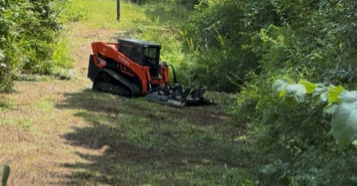
Honeysuckle thrives in the same places that make it hardest to reach with traditional equipment — along fence lines, in creek bottoms, on wooded draws, and in the back corners of residential lots. That's exactly where a single forestry mulcher works best. We maneuver in tight spaces a skid steer can't reach and grind the invasives out without tearing up the ground or the trees you want to keep.
For landowners dealing with cedar on top of honeysuckle, our pasture reclamation service handles the woody encroachment on open ground. If you're clearing a lot to build, see our lot clearing service.
Why Morris Land Clearing?
Jared "Mo" Morris is on every job. You work directly with the person running the machine — not a dispatcher or a sales rep.
Honeysuckle Removal FAQs
Common questions from landowners fighting invasives across Missouri and Illinois.
Ready to Get Started?
Get in touch with us today for a free estimate. Open 7 days a week.